

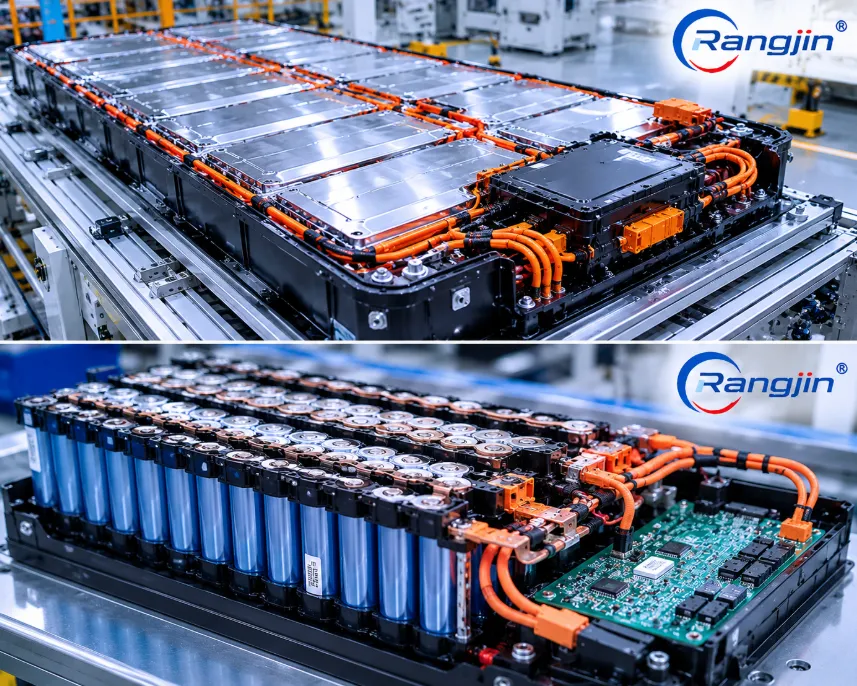
1. Why Do Automotive Controllers Need Potting?
Automotive controllers are typically composed of PCBs, capacitors, inductors, chips, connectors, power devices, and sensing components. They are widely used in:
- Motor controllers
- Body control modules (BCM)
- Water pump controllers
- Battery management system (BMS) modules
- Thermal management controllers
- Fan controllers
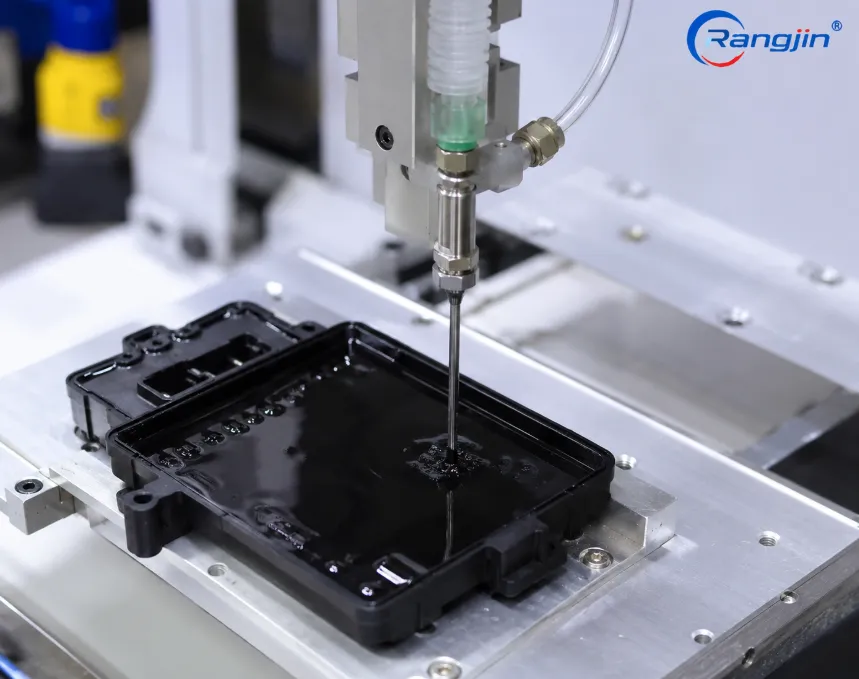
During operation, these electronic modules are exposed to multiple environmental challenges, including:
- Continuous heat generated by power components
- Vibration and mechanical shock during vehicle operation
- Moisture, water vapor, and dust intrusion
- Thermal stress caused by repeated temperature cycling
- Insulation risks in high-voltage electrical environments
- Limited heat dissipation space due to compact internal structures
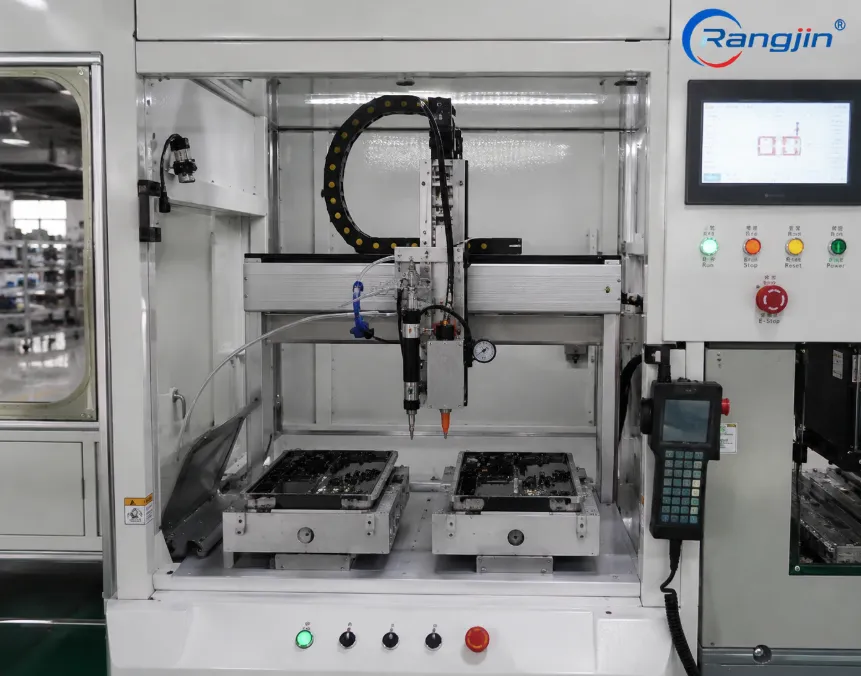
Without reliable potting protection, automotive controllers may experience performance degradation or even premature failure over time.
The key functions of potting in automotive controllers include:
- Thermal management and heat dissipation
- Electrical insulation protection
- Moisture and waterproof protection
- Shock and vibration resistance
- Component fixation and structural reinforcement
- Flame-retardant safety enhancement
- Reduction of thermal and mechanical stress
- Improved long-term reliability

2. Challenges in Selecting Potting Materials for Automotive Controllers
Choosing a potting compound for automotive electronics is not simply about finding a material that can “fill the enclosure.” Controller applications demand a combination of advanced material properties.
1. Excellent Thermal Conductivity
Power devices, inductors, capacitors, and chips inside controllers generate significant heat during operation. If the potting material cannot effectively transfer heat, localized overheating may occur, reducing the lifespan of electronic components.
Therefore, automotive controller potting compounds must provide efficient thermal conductivity.
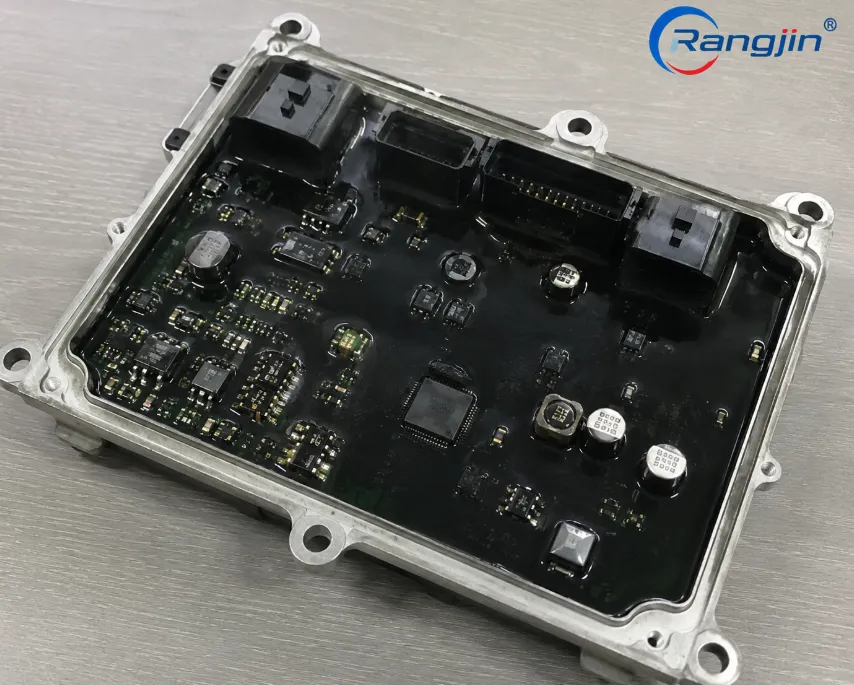
2. Good Flowability
Automotive controllers usually contain complex internal structures with narrow gaps and hard-to-reach areas between components.
If the potting compound has poor flowability, it may result in:
- Incomplete filling
- Air bubble entrapment
- Voids beneath components
- Uneven potting surfaces
- Insufficient local insulation protection
A low-viscosity, high-flow material can better penetrate component gaps, improving encapsulation integrity and potting consistency.
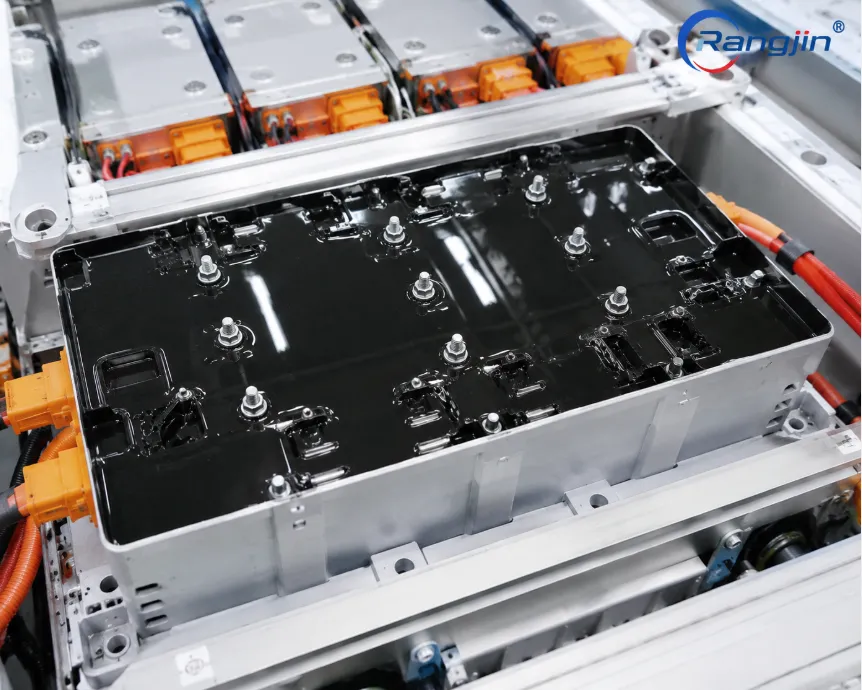
3. Low Cure Shrinkage
Excessive shrinkage during curing can create stress on components, solder joints, and PCBs, potentially leading to:
- Cracked solder joints
- Component deformation
- Bonding interface failure
Low shrinkage helps minimize curing stress and improves long-term controller reliability.
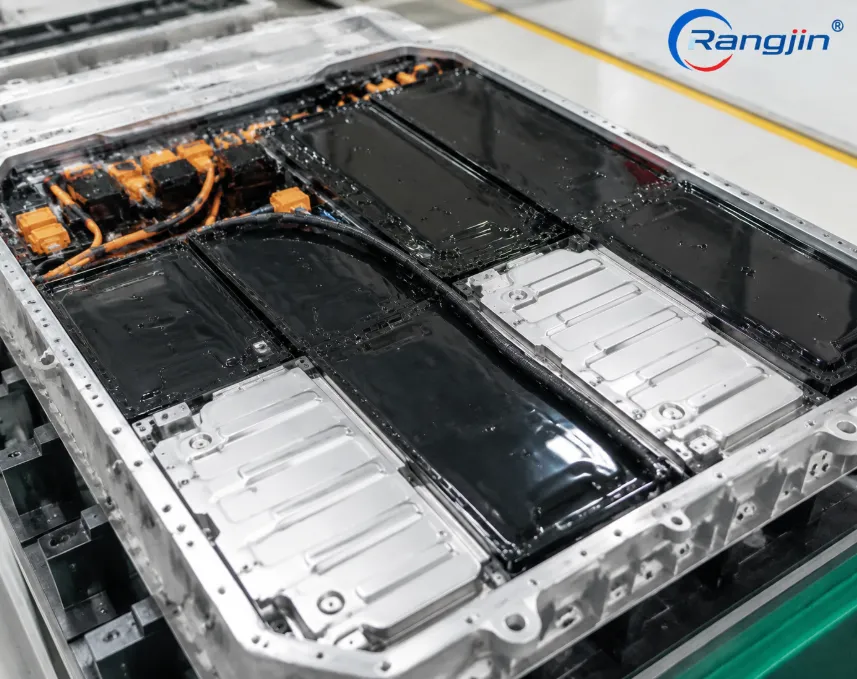
4. Flame Retardancy
Automotive electronics, especially in new energy vehicles (NEVs), high-voltage systems, and power control modules, require a high level of safety.
A potting material with UL94 V-0 flame-retardant performance can significantly enhance safety under abnormal operating conditions.
5. Reliable Electrical Insulation
Automotive controllers contain numerous electrical connections and electronic circuits. Potting materials must provide excellent electrical insulation to reduce the risks of:
- Leakage current
- Short circuits
- Electrical breakdown
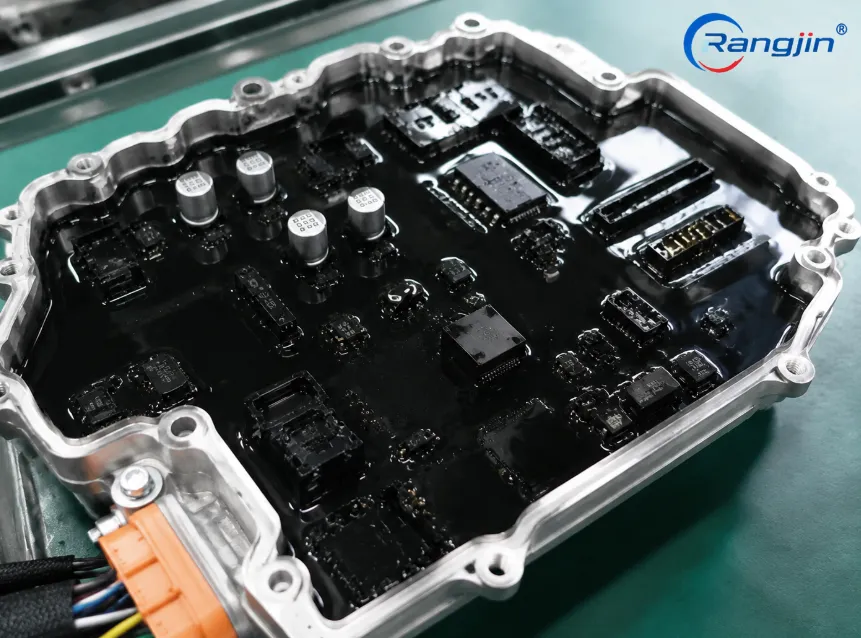
3. Why Is RANGJIN 1850 Recommended for Automotive Controller Potting?
automotive electronic modules, and power electronic applications.Its key advantages include:
✅ High thermal conductivity
✅ Excellent flowability
✅ Low cure shrinkage
✅ UL94 V-0 flame retardancy
✅ Outstanding electrical insulation
These properties directly address the core requirements of automotive controller potting applications.
4. Key Advantages of RANGJIN 1850
1. High Thermal Conductivity for Stable Heat Dissipation
Automotive controllers contain densely packed components, especially power devices that continuously generate heat during operation.
If heat cannot be efficiently dissipated, internal temperature rise may negatively affect chips, capacitors, inductors, and solder joint reliability.
RANGJIN 1850 offers excellent thermal conductivity, helping transfer heat from electronic components to the housing or heat dissipation structure, thereby reducing localized heat accumulation.
Suitable applications include:
✅ Automotive controller potting
✅ Power module potting
✅ Motor controller potting
✅ Thermal management controller potting
✅ New energy electronic module potting
For high-power-density, compact, and highly integrated controllers, thermally conductive potting materials are essential for system reliability.
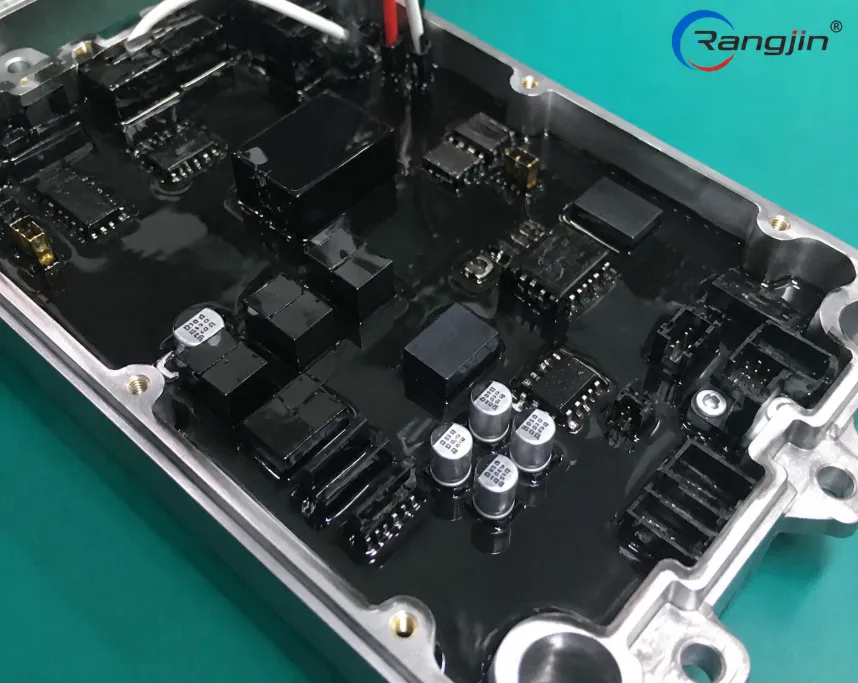
2. Excellent Flowability for Complex Structures
The internal layout of automotive controllers is often uneven and densely populated with components such as capacitors, inductors, chips, connectors, terminals, and sensors.
Poor-flowing potting materials may cause:
✅ Incomplete filling beneath components
✅ Inability to penetrate narrow gaps
✅ Air bubble entrapment
✅ Uneven encapsulation
✅ Insufficient local insulation protection
RANGJIN 1850 features excellent flowability, making it ideal for filling complex controller structures and achieving uniform encapsulation.
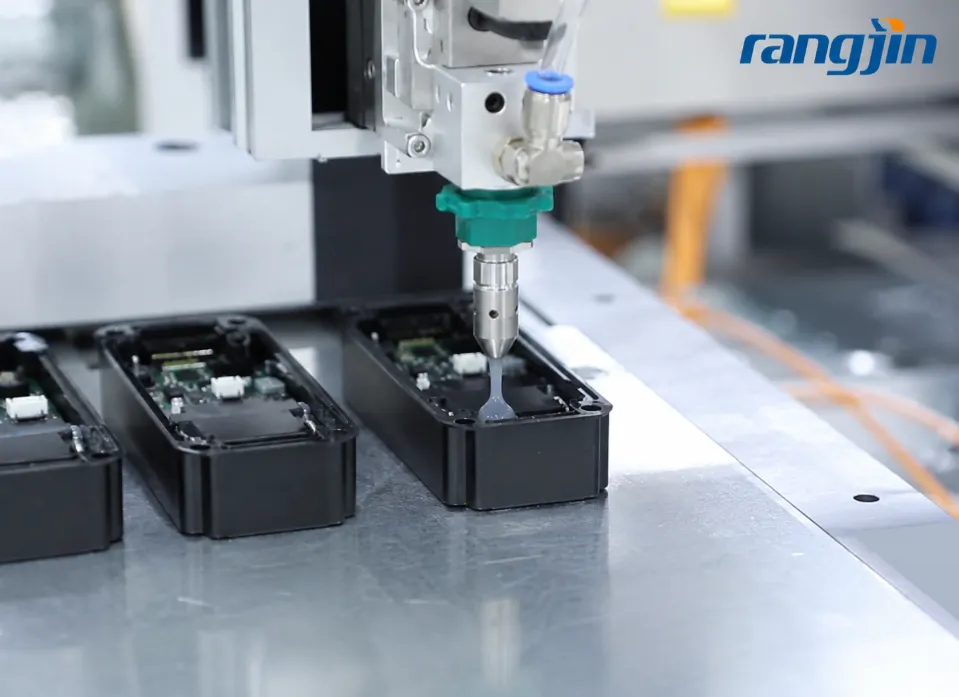
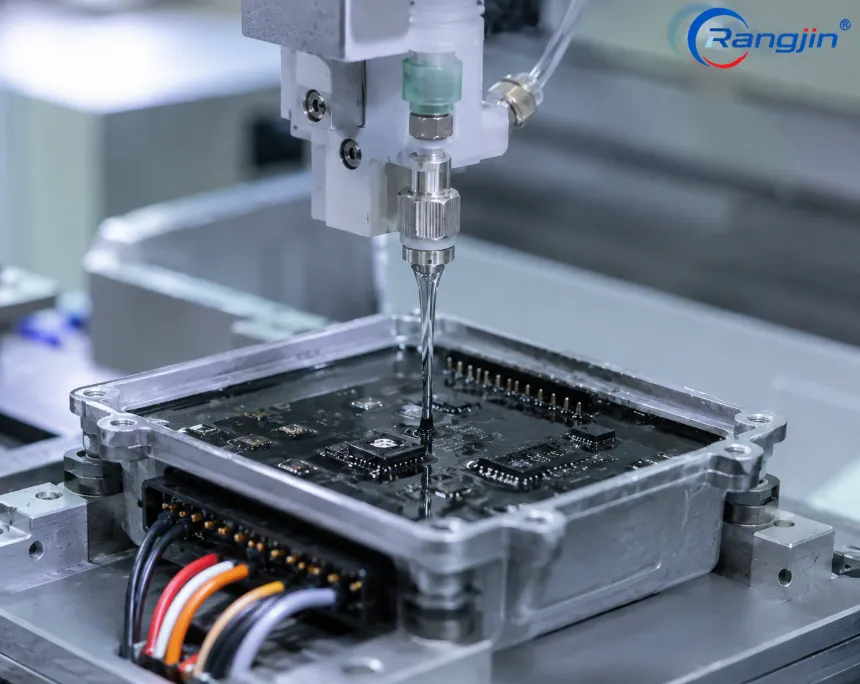
For automated dispensing and potting production lines, good flowability also helps improve production efficiency and process consistency.
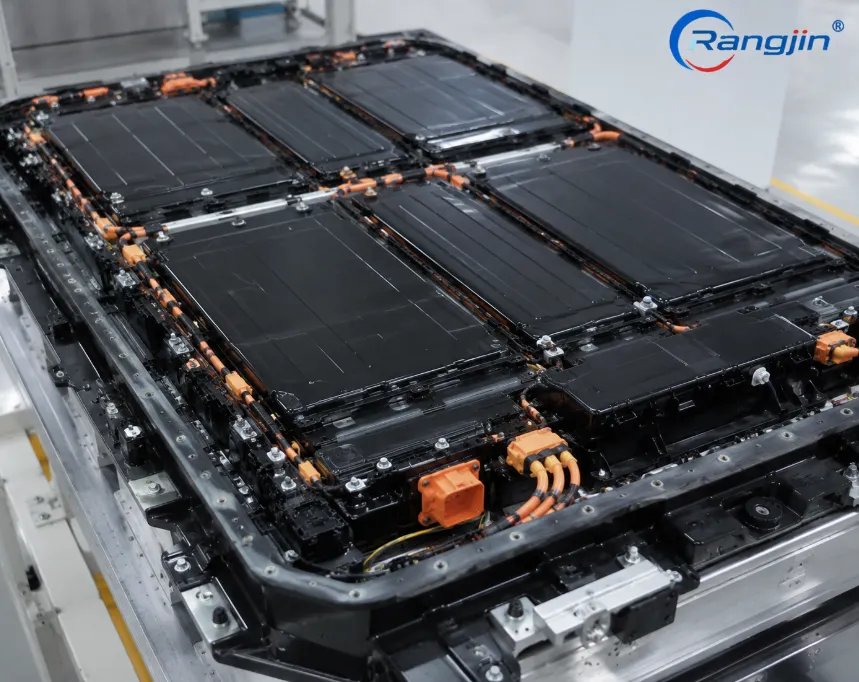
3. Low Cure Shrinkage to Reduce Stress on Components
PCBs, solder joints, and electronic components inside automotive controllers are highly sensitive to mechanical stress.
If the potting material shrinks significantly during curing, it may create tensile stress that affects long-term product reliability.
RANGJIN 1850 features low cure shrinkage, helping minimize curing stress and reduce stress impact on components and solder joints.
This is especially important for:
✅ Precision controller potting
✅ High-density PCB encapsulation
✅ Thin-profile control modules
✅ Automotive ECU protection
✅ Long-term reliability design for NEV controllers
Low shrinkage affects not only initial potting quality but also long-term reliability under thermal cycling conditions.
4. UL94 V-0 Flame Retardancy for Enhanced Safety
Automotive electronics demand extremely high safety standards, particularly in electric vehicles, power electronics, and high-voltage control systems.
RANGJIN 1850 offers UL94 V-0 flame-retardant performance, helping improve fire safety protection for automotive controllers.
Typical applications include:
✅ Motor controllers
✅ High-voltage control modules
✅ On-board power supply modules
✅ Electric vehicle electronic control units
✅ Thermal management systems
✅ Power conversion modules
Under abnormal overheating, electrical faults, or external heat exposure, flame-retardant materials provide additional safety protection.
5. Excellent Electrical Insulation for Electrical Safety
Potting compounds for automotive controllers must not only provide filling and heat dissipation, but also reliable electrical insulation.
RANGJIN 1850 offers outstanding electrical insulation properties, helping reduce:
✅ Leakage current risks
✅ Short-circuit risks
✅ Electrical breakdown risks
✅ Insulation degradation caused by moisture
✅ Electrical failures caused by conductive contaminants
For controllers operating in humid, high-temperature, and high-vibration environments, electrical insulation performance is a critical factor in evaluating potting material reliability.
5. Applications of RANGJIN 1850 in Automotive Electronics
RANGJIN 1850 is suitable not only for automotive controller potting, but also for a wide range of automotive and new energy electronic modules.
1. Automotive Controller Potting
Provides thermal management, insulation, moisture protection, and vibration resistance for controller PCBs, power devices, signal components, and connectors.
2. Motor Controller Potting
Motor controllers generate concentrated heat and require excellent thermal conductivity and electrical insulation.
RANGJIN 1850 helps improve internal thermal management and electrical protection.
3. Water Pump Controller Potting
Automotive water pump controllers operate in environments exposed to moisture, vibration, and temperature fluctuations.
Potting materials must provide moisture resistance, insulation, vibration protection, and thermal conductivity.
4. On-Board Power Module Potting
On-board power supply modules require high flame retardancy, thermal conductivity, and electrical insulation.
The UL94 V-0 flame-retardant and thermally conductive properties of RANGJIN 1850 make it well suited for these applications.
5. New Energy Vehicle Electronic Module Potting
Electronic control modules in EVs are commonly used in electric drive systems, battery systems, thermal management systems, and charging systems, all of which require highly reliable long-term protection.
6. Recommended Potting Process for Automotive Controllers
To achieve stable and reliable potting performance, the following process considerations are recommended:
✅ Maintain PCB surface cleanliness
Prevent oil, dust, and moisture contamination that may affect adhesion and insulation.
✅ Design proper potting height
Adjust potting thickness according to component height and thermal requirements.
✅ Control air bubbles
For complex structures, vacuum degassing or low-speed dispensing is recommended to minimize trapped air.
✅ Optimize curing conditions
Set appropriate curing parameters based on product structure and production cycle requirements.
✅ Verify thermal transfer paths
Ensure effective thermal conduction between heat-generating components and the housing.
✅ Conduct reliability testing
Recommended tests include thermal cycling, damp heat aging, vibration testing, and electrical insulation evaluation.
7. Selection Guidelines for Automotive Controller Potting Compounds
When selecting a potting material for automotive controllers, key factors to evaluate include:
✅ Thermal conductivity
✅ Flowability
✅ Cure shrinkage
✅ Flame-retardant rating
✅ Electrical insulation performance
✅ High and low temperature resistance
✅ Adhesion compatibility
✅ Curing process
✅ Bubble control capability
✅ Long-term reliability test results
For automotive controllers, motor controllers, on-board power modules, and new energy vehicle electronic control units, it is recommended to prioritize potting materials that offer:
- High thermal conductivity
- Low shrinkage
- UL94 V-0 flame retardancy
- Excellent electrical insulation
- Good flowability
Associated Products
You may also be interested in the following products:
Online 3 Stage Automatic Vacuum Potting System for Electronics
Automated Vacuum Glue Potting Machine
Two Component Potting Dispensing Equipment
3 Axis Automatic Potting Dispenser Machine
Semi Automatic Potting Machine