


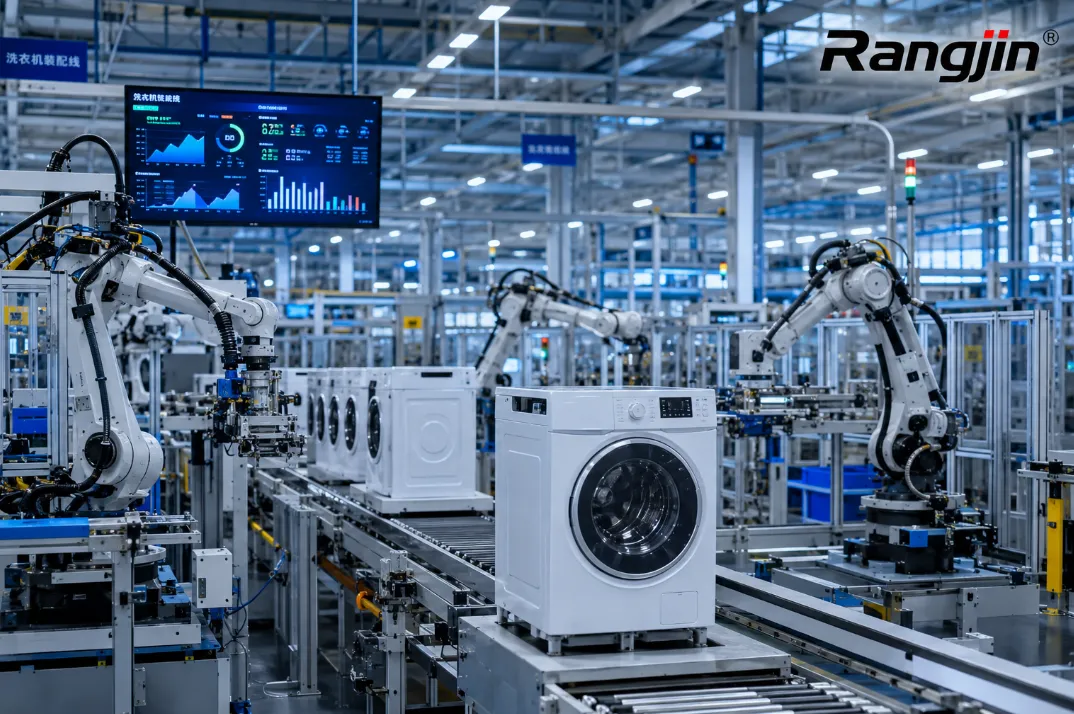
In recent years, the global economy has experienced rapid growth, and the home appliance industry has emerged as one of its strongest performers. As industry competitiveness continues to improve, production capacity has expanded significantly, and supply chains have become increasingly mature. However, alongside this rapid development, challenges such as overcapacity caused by excessive expansion and intensified market competition have gradually surfaced. These issues have put pressure on profit margins, weakened competitiveness, and hindered sustainable industry growth.
Against this backdrop, on October 9, 2025, Rangjin received a procurement request from a leading home appliance manufacturer seeking a fully automated vacuum potting line to optimize its motor stator encapsulation process. This project represented not only a test of Rangjin’s engineering capabilities but also an important opportunity to strengthen its presence in the home appliance sector and expand its international market influence.
Leveraging its extensive technical expertise and industry experience, the Rangjin team responded quickly. Through intensive development and manufacturing efforts, the first prototype was completed and successfully tested on November 1, 2025, fully meeting the customer’s demanding requirements.
Meeting the Challenges of Smart Manufacturing with an Automated Vacuum Potting Solution
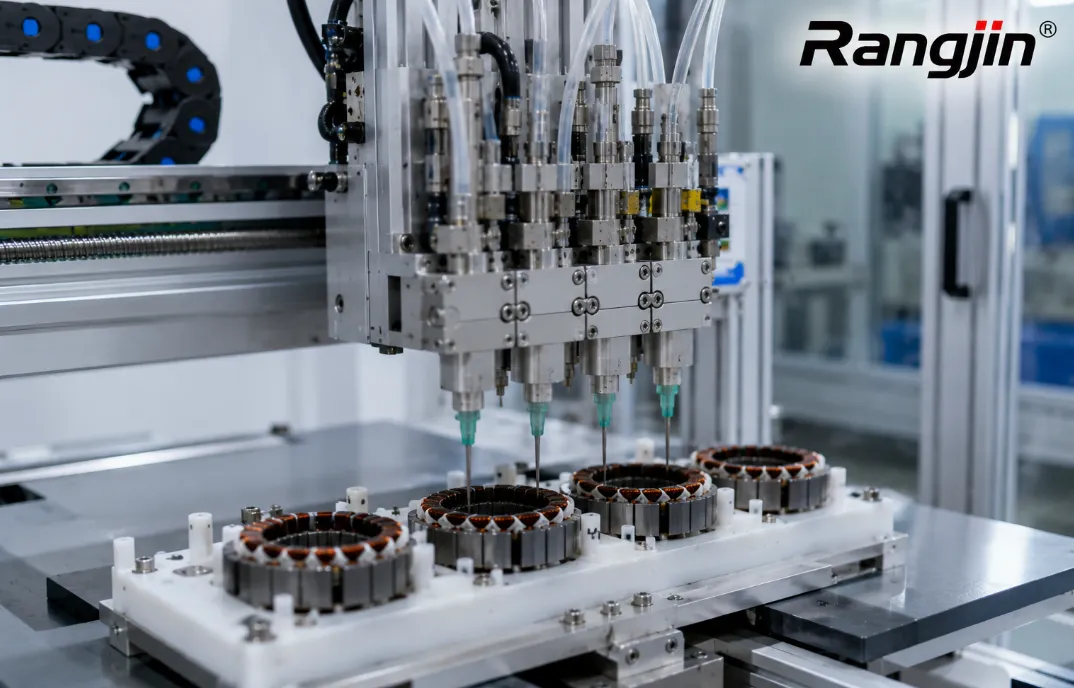
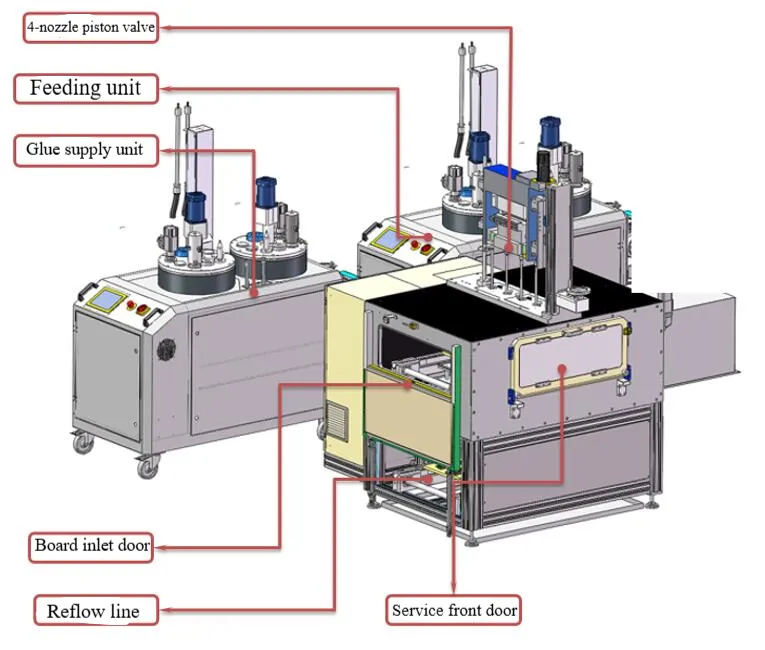
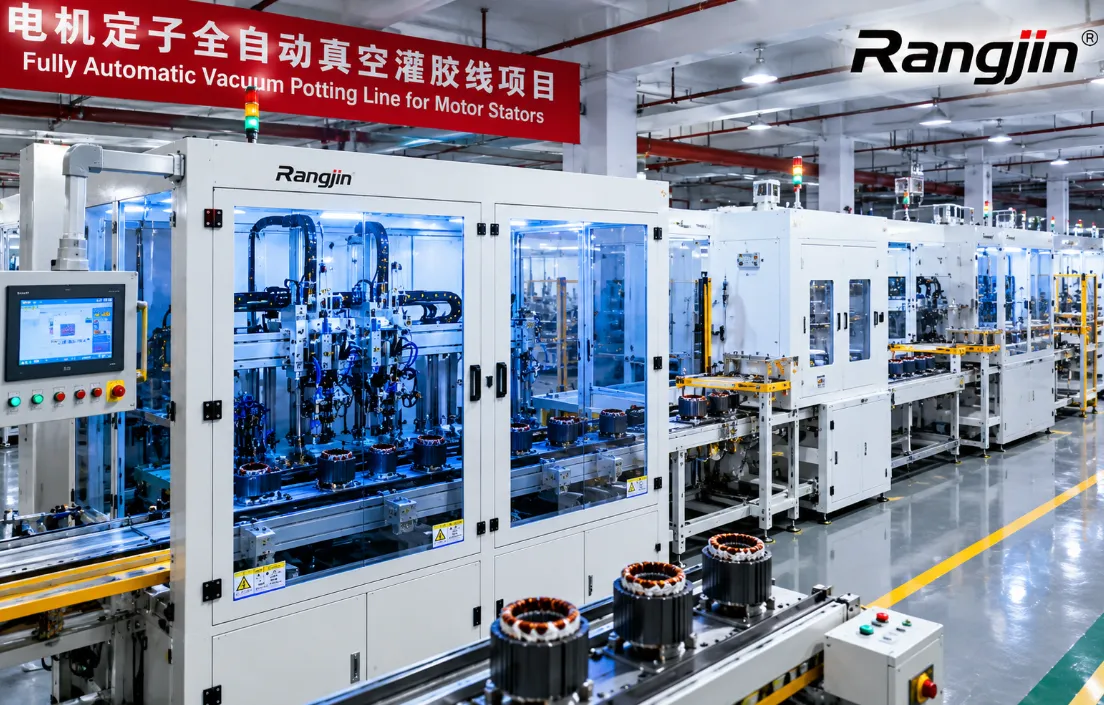
The project, officially named the Motor Stator Fully Automated Vacuum Potting Line Project, was designed to improve dispensing consistency and production efficiency through advanced automation technologies.
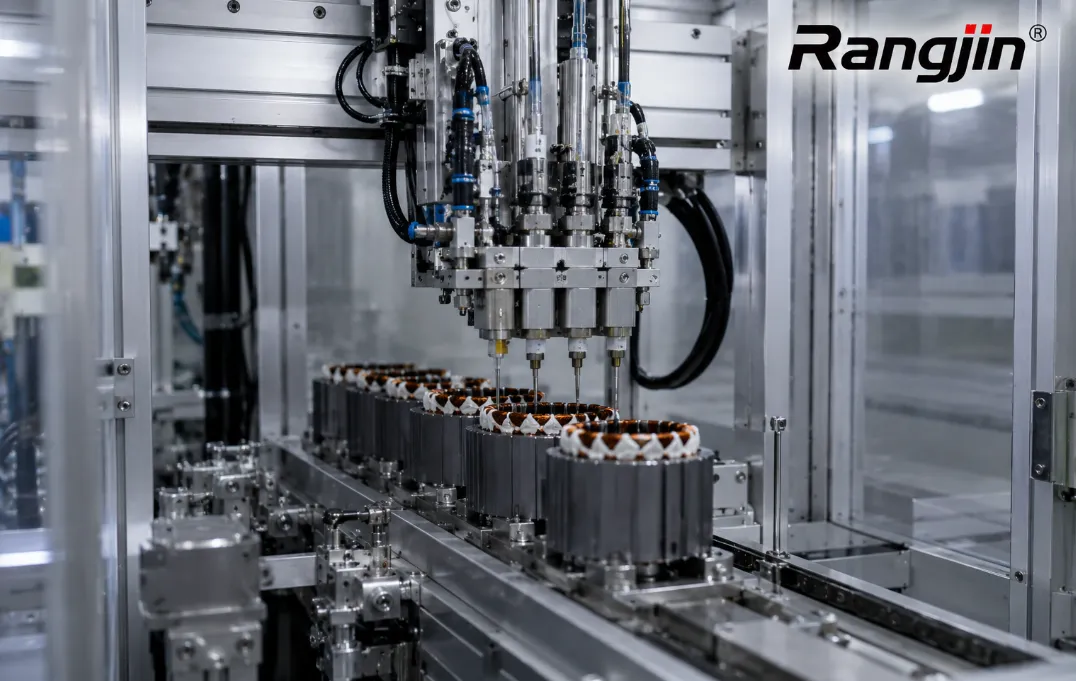
One of the most significant innovations involved positioning four piston-valve dispensing heads directly inside the vacuum chamber. By shortening the fluid delivery path, the system significantly enhanced dispensing stability. This innovative design allows the potting material to be injected more evenly and consistently into motor stators under vacuum conditions, improving product quality while increasing manufacturing efficiency and reducing operational costs.
Bringing Together Rangjin Expertise for Exceptional Technical Support
Rangjin’s Precision Potting Division played a pivotal role throughout the project. The team consisted of pre-sales engineers, solution engineers, product managers, mechanical engineers, electrical engineers, and software engineers, all working closely together to ensure project success.
-
Pre-sales engineers conducted sample testing to verify process feasibility.
-
Solution engineers developed customized technical proposals tailored to customer requirements.
-
Product managers evaluated process compatibility and functional requirements.
-
Mechanical engineers designed detailed 3D models and equipment structures.
-
Electrical engineers developed reliable electrical systems and circuit designs.
-
Software engineers programmed and optimized the automation control system.
This collaborative approach ensured seamless project execution from concept to production.
Overcoming Technical Challenges and Advancing Potting Technology
During development, the selection of the secondary valve inside the vacuum chamber underwent several iterations.
Initially, a pinch valve was used, but excessive material pressure caused seal failure. The team then switched to a shut-off valve, which introduced leakage issues around rotating components. Rather than settling for compromise, the engineering team continued refining the solution.
Ultimately, a needle-impact valve was selected, and a full-process material heating system was successfully implemented. This combination resolved the leakage challenges and ensured stable, reliable operation of the potting line. The process demonstrated both the team's determination and its strong engineering capabilities.
Expanding Application Possibilities and Market Potential
The automated vacuum potting line offers extensive application opportunities within the motor manufacturing sector.
In addition to motor stators used in household appliances such as washing machines and refrigerators, the technology can also be applied to electric vehicles, wind power generators, industrial motors, and other products requiring stator encapsulation.
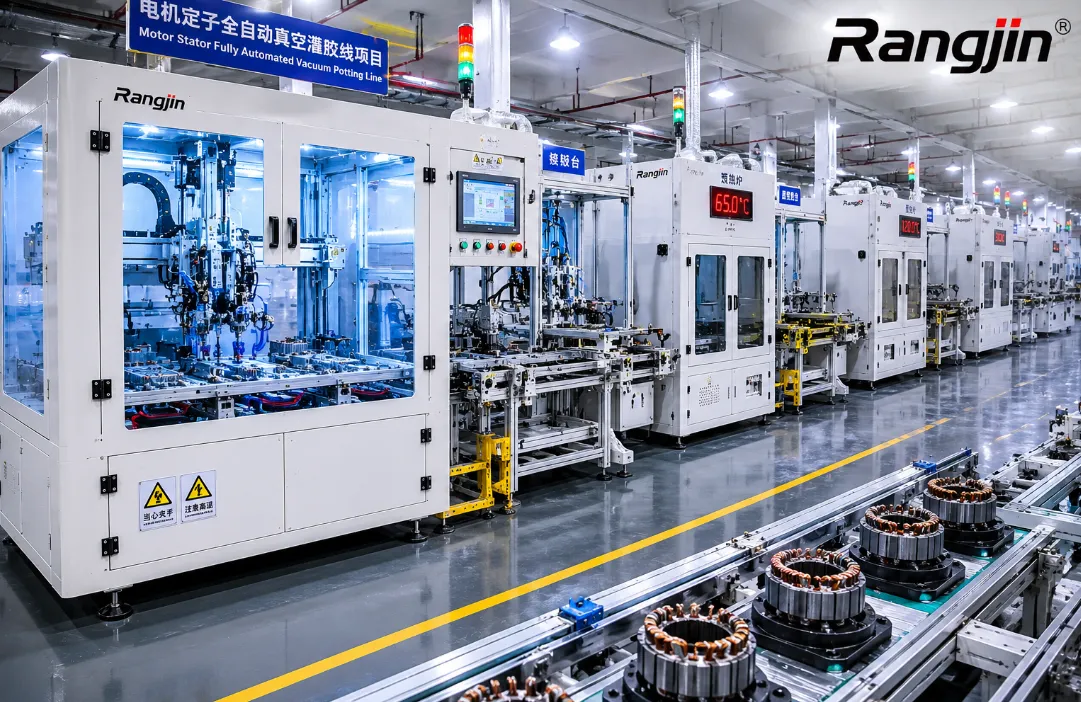
The production line includes:
-
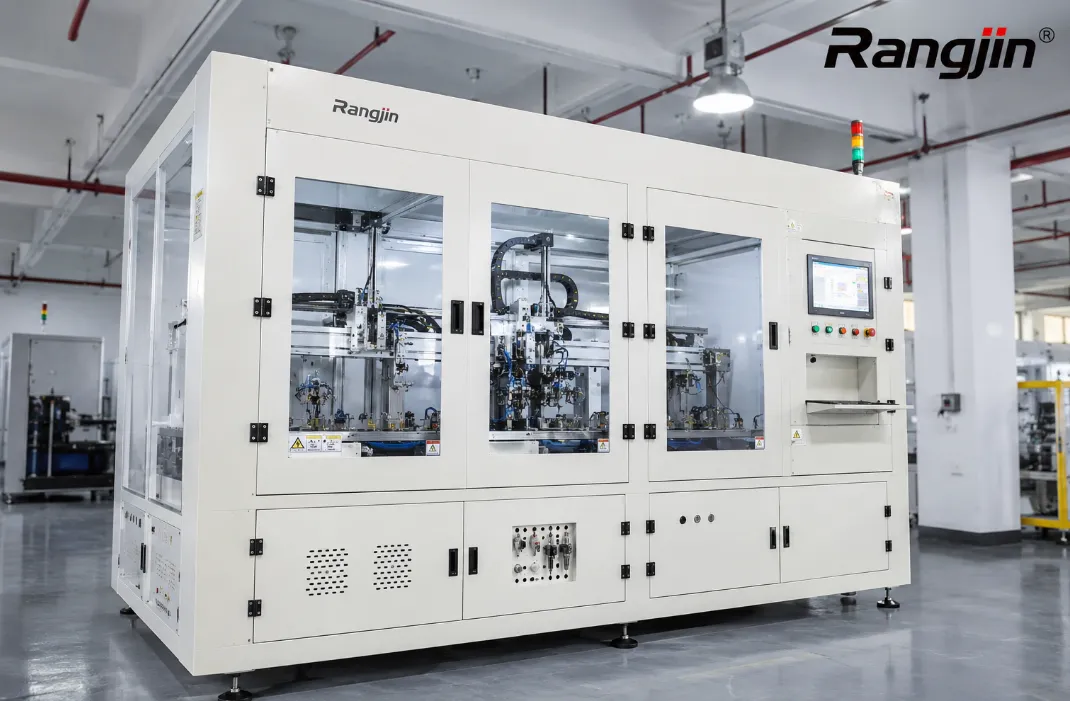
One four-head inline vacuum potting machine
-
One preheating oven
-
One curing oven
-
Three transfer stations
-
Four lifting and transfer modules
-
One cooling oven
Together, these systems form a highly efficient and stable production line, providing customers with a complete solution covering preheating, dispensing, curing, and cooling processes.
Innovation-Driven Technology Creates Competitive Advantages
Several technical innovations distinguish this project from conventional potting solutions.
Full Material Heating Technology
To address challenges associated with high-viscosity and high-ratio potting materials, Rangjin developed a full-process material heating solution. Larger-diameter static mixing tubes were utilized to reduce dispensing pressure and eliminate cross-flow issues between material channels.
This innovation significantly improved dispensing consistency while enhancing product quality and reducing operating costs.
Four-Head Simultaneous Dispensing Design
The integration of four dispensing heads dramatically increased production efficiency by allowing multiple motor stators to be processed simultaneously. This design substantially improved throughput and production capacity.
Additional Technical Advantages
The system also offers:
-
Negative-pressure material tank dispensing
-
Independent or synchronized operation of four piston valves
-
High-precision dispensing control
-
Enhanced process stability and repeatability
These features enable more accurate, efficient, and reliable potting operations.
Listening to Customers and Pursuing Continuous Improvement
Throughout the project, the team encountered significant challenges, particularly related to secondary valve sealing performance and material crossover within piston valves.
Rather than accepting limitations, Rangjin worked closely with suppliers and technical partners to identify root causes and develop effective solutions. After extensive testing and optimization, the team successfully implemented a full-process heating strategy that reduced material viscosity and improved flow characteristics.
This breakthrough not only solved the technical issues but also delivered measurable improvements in productivity and product quality.
The customer highly praised Rangjin for its professionalism, technical expertise, and strong sense of responsibility. They noted the team's ability to respond quickly to challenges and provide reliable solutions.
At the same time, the customer suggested that future projects should place even greater emphasis on early-stage configuration assessments to minimize structural modifications and additional costs later in the project lifecycle. Rangjin welcomed this feedback and committed to further enhancing its project planning and evaluation processes.
Driving Technological Innovation in the Home Appliance Industry
The significance of this project extends beyond the successful implementation of multi-head vacuum potting technology.
It represents a major advancement in motor stator encapsulation processes, delivering substantial improvements in both product quality and manufacturing efficiency. The technologies developed through this project provide valuable reference points for other industries facing similar production challenges.
Furthermore, the project highlights Rangjin’s strong capabilities in research, development, and engineering innovation. By overcoming multiple technical obstacles, the company has delivered a more efficient, accurate, and reliable potting solution to the market.
Proven Market Success and Outstanding Business Performance
The automated vacuum potting line has already achieved impressive commercial success.
To date, customers have deployed over 100 automated vacuum potting production lines, which have played a critical role in meeting production capacity requirements and process quality standards.
These systems have significantly improved manufacturing efficiency, enhanced product quality, and strengthened customers’ competitive positions in their respective markets.
In 2025, vacuum potting line projects accounted for more than 30% of Rangjin’s total annual sales revenue, demonstrating strong market demand and competitiveness.
The success of these projects has also strengthened Rangjin’s brand reputation and laid a solid foundation for future international expansion.
Looking Ahead: Continuous Innovation for Greater Value
Moving forward, Rangjin will continue investing in the research and development of automated vacuum potting technologies.
One key focus area is the development of ceramic screw pumps, which are expected to deliver longer service life, improved cost-effectiveness, and enhanced overall performance. This innovation will further strengthen Rangjin’s core competitive advantages while providing customers with even more reliable and efficient potting solutions.
At the same time, Rangjin remains committed to optimizing production costs without compromising quality, enabling customers to remain competitive in an increasingly challenging market environment.
The successful implementation of the Motor Stator Fully Automated Vacuum Potting Line Project has not only advanced manufacturing technology within the home appliance industry but has also reinforced Rangjin’s position as a trusted global provider of intelligent potting solutions.
Associated Products
You may also be interested in the following products:
Online 3 Stage Automatic Vacuum Potting System for Electronics
Automated Vacuum Glue Potting Machine
Two Component Potting Dispensing Equipment
3 Axis Automatic Potting Dispenser Machine
Semi Automatic Potting Machine